Whether you’re a plumber, electrician, builder or landscaper, your website should do more than tell people your business exists. It should showcase your work, explain your services and give potential customers the confidence to get in touch.
But what pages should you include? And do you really need a separate page for every service you offer?
There’s no one-size-fits-all answer. The right website structure depends on your business, the customers you want to attract and the type of work you want to win.
1. Why your website structure matters
Think about someone searching for a local electrician or researching companies to install a new driveway. They’ll want to find relevant information quickly, see examples of previous work and understand why they should choose you.
A well-structured website makes that process easier. It also helps Google understand your services, potentially improving your visibility when customers search for the work you offer.
Every important page should have a purpose, whether that’s explaining a service, building trust or encouraging an enquiry.
2. The essential pages every trade website should consider
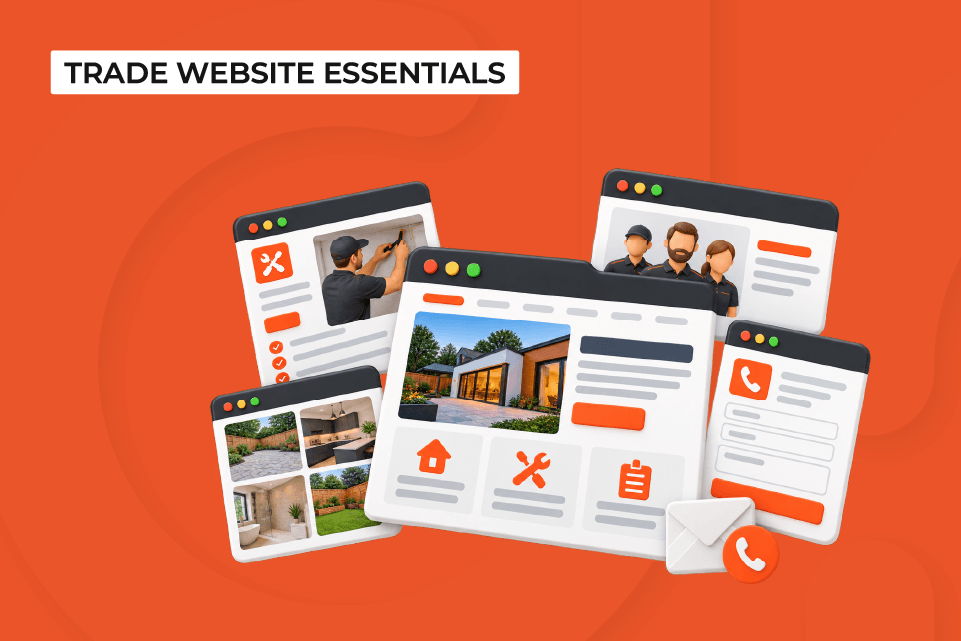
Most trade websites benefit from five core pages that give customers a clear introduction to the business.
- Homepage: Explain what you do, where you work and why customers should choose you. Highlight your main services and make it easy to request a quote.
- About us: Introduce yourself or your team, share your experience and highlight relevant qualifications or accreditations.
- Services: Give visitors an overview of the work you offer, with links to individual service pages where appropriate.
- Gallery: Showcase completed projects so customers can see the quality of your workmanship and the types of jobs you undertake.
- Contact: Include your telephone number, email address, enquiry form and the areas you cover.
These pages provide a solid foundation, but they’re only the starting point. Depending on your business, additional pages could help attract more relevant enquiries.
3. Why individual service pages are important
Imagine you’re an electrician offering house rewires, consumer unit replacements, electrical inspections and EV charger installations.
Although they’re all electrical services, customers searching for each one have different questions and requirements.
Creating dedicated pages for your main services allows you to:
- Explain exactly what’s involved in each service.
- Answer common customer questions.
- Show photographs of relevant completed work.
- Target more specific searches on Google.
- Encourage visitors to request a quote for that particular service.
Not every small job needs its own page. Focus on services that customers actively search for and those you want to promote.
4. Showcasing previous work
A gallery is a great way to show what you can do, but some projects deserve a little more attention.
Dedicated project pages or case studies allow you to explain the customer’s requirements, the work involved and the finished result.
For example, a landscaping company could showcase a complete garden transformation, including before-and-after photographs, materials used and a customer testimonial.
This helps potential customers picture what you could achieve for them and provides genuine evidence of your experience.
5. Reviews, FAQs and other trust-building content
Customers want reassurance before inviting someone to work on their property. Your website should help answer their concerns and demonstrate that you’re a reliable choice.
Useful trust-building content includes:
- Customer reviews: Show what previous customers think about your work.
- Qualifications and accreditations: Highlight relevant training, certifications and professional memberships.
- Frequently asked questions: Answer common questions about your services, timescales and processes.
- Guarantees: Explain any workmanship guarantees or warranties you provide.
These don’t necessarily need separate pages. Reviews and FAQs often work particularly well alongside individual services, helping customers find reassurance when they need it.
6. Should you create pages for different locations?
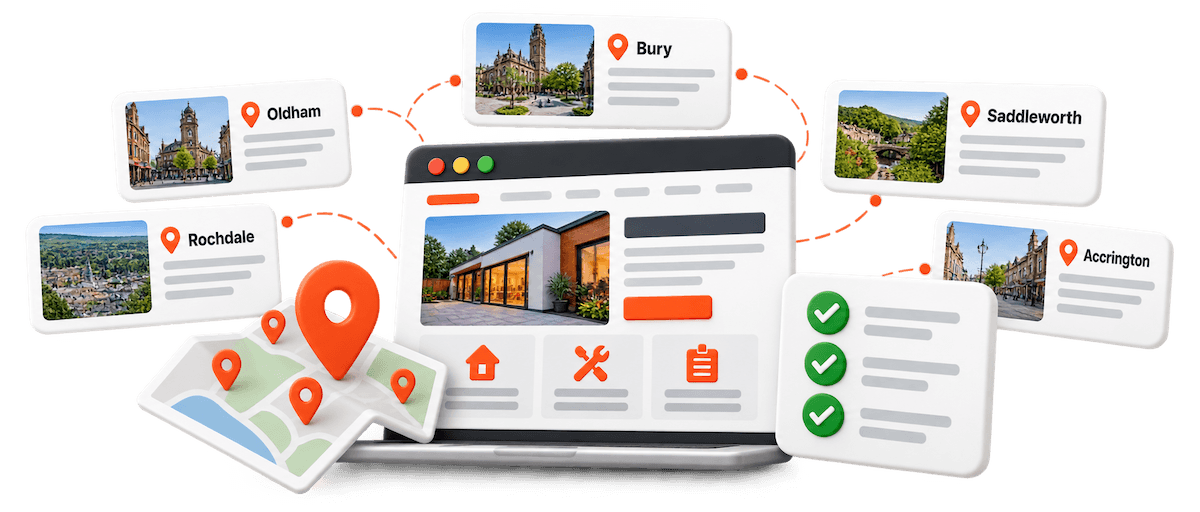
If your business covers several towns, dedicated location pages can help you reach customers searching for tradespeople in those areas.
For example, a bathroom fitter based in Bury might also want to attract customers in Burnley and Accrington.
Creating useful pages for these locations can help demonstrate where you work and improve your chances of appearing in relevant local searches.
However, avoid simply duplicating pages and changing the town name. Include genuinely useful information, such as examples of nearby projects, relevant services and customer reviews.
It’s also worth concentrating on locations where you actually want more work, rather than targeting everywhere within driving distance.
7. How many pages does a trade website actually need?
There’s no magic number. A new business could benefit from launching with 20 pages, while an established company might only need a handful.
Rather than worrying about page numbers, start by thinking about what you want your website to achieve.
- Your most profitable services: Which jobs generate the best returns? These are often worth prioritising with dedicated pages.
- The work you want more of: You might offer ten services but only want to actively promote five.
- Your future direction: Perhaps you’re a general builder looking to specialise in extensions and renovations.
- What customers search for: Different services often deserve individual pages because people search for them separately.
- Your budget and ambitions: You can start small and expand later, or build a comprehensive website from the beginning.
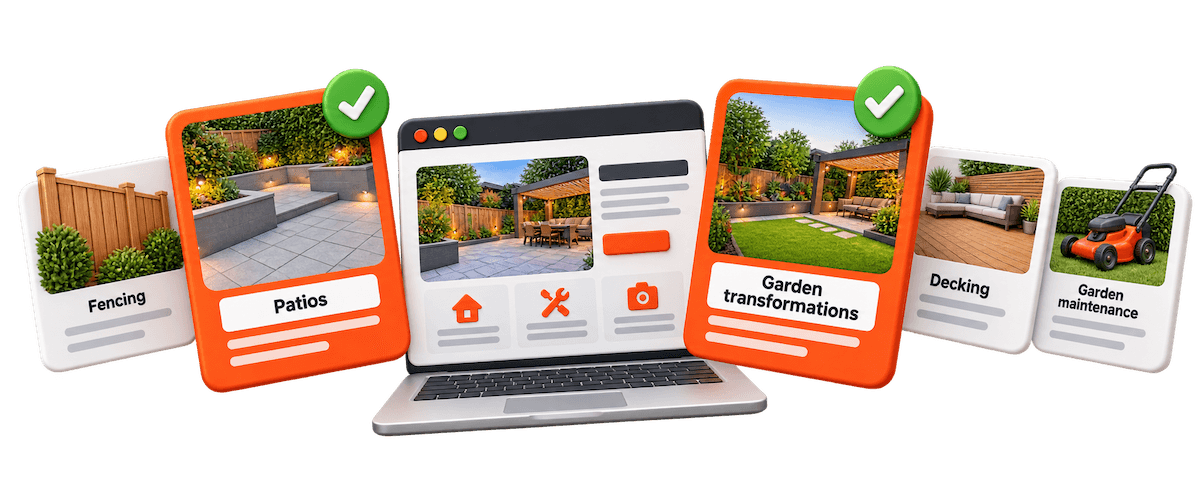
For example, a landscaping company might offer fencing, decking, patios, artificial grass and complete garden transformations.
If patios and garden transformations are the most profitable and enjoyable projects, it makes sense to prioritise those services when planning the website.
Don’t decide how many pages your website needs before deciding what you want your website to achieve.
8. Build for today, plan for tomorrow
Your website doesn’t need to include everything from day one, but it should be built with future growth in mind.
As your business develops, you can introduce additional service pages, target new locations, publish case studies and create helpful advice articles answering common customer questions.
Planning ahead makes it easier to expand your website without having to rebuild everything each time your business grows.
Final thoughts: Focus on the pages that matter
A successful trade website isn’t measured by how many pages it contains. It’s about having the right information in the right places to attract customers and turn visitors into enquiries.
Start with the services you most want to promote, think about what your customers need to know and build your website around those priorities.
Whether you’re launching with five pages or twenty, make sure every page has a purpose.
In our next guide, How to get your trade website found on Google, we’ll explore how search engine optimisation can help potential customers discover your business online.